Inside Matters
The gut health show – conversations with the most forward-thinking minds in health, fitness, science, nutrition and business. In-depth discussions about how our gut microbiome impacts our health, well-being, mood and more.
Inside Matters was conceived by microbiome expert Dr James McIlroy as a platform to raise awareness of the importance of the gut microbiome. Our aim is to inspire and educate listeners around the world about the importance of gut health, equipping them with the knowledge they need to transform their lives for the better.
Produced by the Podcast Studio Glasgow.







Episodes
Dec 7, 2023
Dec 7, 2023
1 hr 45 min
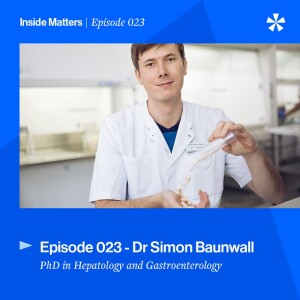
In episode 23 we chat with Dr. Simon Baunwall, a medical doctor and scientific researcher focused on fecal microbiota transplantation, also known as FMT. Dr. Baunwall is based at Arras University Hospital in Denmark.
This conversation centred around the establishment of fecal microbiota transplantation (FMT) as a therapy in Denmark.
Simon talked to us about his work which centres around establishing FMT as a standardised, scalable approach using a blood banking type model, is fascinating. We talked about his perspectives on how the field might evolve looking forward, the next indication after recurring C-difficile infection, and the progression of FMT delivered by colonoscopy to delivery by capsules.
And we had some interesting philosophical discussions around what is the mechanism of action and how do you define a dose. This is important, as historically what researchers have used is the wet mass of starting material, in other words, stool, that goes into the process. But what we discussed is actually, that's probably not a good definition or metric for dose!
Additionally, we talked about the regulations, which Simon's been very heavily involved with. I particularly enjoyed this episode because Simon is a self-confessed lover of the Inside Matters podcast.
In fact, he has listened to pretty much all the episodes. So it was amazing to have a loyal listener on the podcast to talk about their fantastic work in the microbiome and FMT space.
Timestamps:
00:00:00 Introduction
00:02:38 How Simon got involved in the microbiome
00:04:01 We can do better
00:05:47 Low tech
00:09:21 Patient improvement
00:12:33 The metabolite perspective
00:14:18 How the process is evolving
00:19:31 Universally perfect donor?
00:23:29 Are we doing too much?
00:25:25 Likelihood of false-positives
00:30:18 Undergoing repeated screenings
00:42:02 Preparing for it going wrong
00:44:51 Safety issues
00:50:29 What is your vision?
00:57:31 Is it actually safe?
01:01:48 Building in scale
01:05:20 Accessing screening as a private company
01:10:43 Two different donor types
01:20:09 The struggle to get enough donors
01:24:15 Limitations of diet studies
01:28:07 Dr Mark Hyman
01:30:39 Regulating FMT
01:34:50 Presenting stool as a “drug”
Nov 9, 2023
Nov 9, 2023
1 hr 1 min
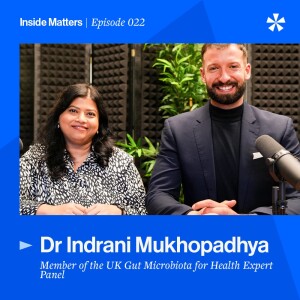
Following is a conversation with Dr Indrani Mukhopadhyay, a lecturer at the Institute of Medical Sciences Microbiology and Immunology Group at the University of Aberdeen.
Over the last ten years, we’ve started to understand more and more about why the virome is important in both health and disease. Indrani is an expert in the viral and has been involved in some of the seminal research to characterise profiles and help us understand why the virus is important. So if you're interested in that, this is a great episode for you.
We also spoke about probiotics and what a next-generation probiotic might be in terms of its composition, structure and function. We spoke about Indrani's career progression. She's been all over the world involved in exciting research and setting up her new lab recently here in Aberdeen. So we covered a range of topics.
Finally, we spoke about inflammatory bowel disease, how the viral elements of the microbiome might be important and how specific depletions of bacteria might be important too.
As always, I wanted to thank you, the listener, for tuning in and for supporting the podcast. It's fantastic to get the feedback we've been getting about people enjoying it and if you are enjoying it and haven't yet liked and subscribed, please do that.
Timestamps:
00:00:00 - Intro
00:01:52 - How did you get into the field of the microbiome?
00:06:32 - Research into developing vaccines
00:12:58 - Effectiveness of vaccines
00:14:24 - Complexity of the rotavirus
00:16:28 - Seasonal flu
00:20:01 - Viruses in our gut
00:24:17 - Viral metagenomics
00:33:06 - Knowledge of viruses greater than of bacteria
00:35:53 - What’s the most important part of the microbiome?
00:37:06 - Bacteriophages
00:40:15 - Enteric viruses
00:41:29 - Fungus in the gut
00:42:39 - Viruses keep bacteria in check
00:43:07 - Most exciting development in microbiome research
00:46:10 - Women in science
00:47:00 - Immunomodulator’s effects on gut viruses.
00:49:23 - Next-generation probiotics
00:52:20 - Taking probiotic supplements
00:54:28 - Manufacturing bacteria to treat patients
00:55:39 - Benefits of single strain vs consortia
00:56:34 - Universally beneficial probiotic?
01:00:25 - Thanks and conclusion
Oct 26, 2023
Oct 26, 2023
1 hr 16 min
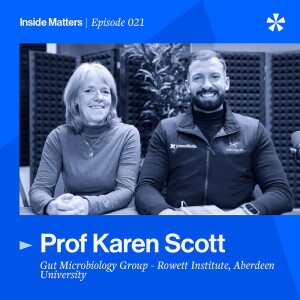
In episode 21 we chat with Professor Karen Scott of the Rowett Institute at the University of Aberdeen.
Watch the podcast on YouTube.
Professor Scott is one of the world's leading researchers for gut health, gut microbiome and all things microbial.
We had a fascinating and at times humourous chat about all things microbiome and bacterium. We cover questions such as;
Does Professor Scott take probiotics? What are some of the limitations of current microbiome research? What is a healthy microbiome and how can you make yours healthier through diet, nutrition and potentially supplements? We also cover the role of fibre in our diet and whether we really need to be eating 5 pieces of fruit and veg a day to get our fibre intake, or whether we can find good sources of fibre in other foods. And we chat about where Professor Scott sees the research into the gut microbiome heading in the next 5 years.
You can listen to this episode as a professor with a keen interest in the subject matter of the gut microbiome and still learn things. Likewise, this could be your first ever Inside Masters podcast and you'll learn a lot.
00:00:00:00 - Intro
00:01:47:09 - Getting into the field of the microbiome
00:06:38:08 - Detriments to bacteria transfer
00:11:17:05 - The problem of antimicrobial resistance
00:18:23:01 - Restoring the microbiome post-antibiotics
00:20:53:10 - Illegal to refer to “probiotics”?
00:21:51:23 - Is it a viral or bacterial infection?
00:25:21:07 - Discussion on vancomycin
00:30:29:02 - Does the microbiome change from when people are born and as they get older?
00:32:17:23 - Understanding how bacteria “use us”
00:34:58:13 - Why fibre is so important to the gut
00:40:30:01 - The risks of too much protein
00:41:48:08 - Are some fibres better than others?
00:48:40:04 - Does our gut make us “crave” certain foods?
00:50:17:14 - What is a “healthy” gut microbiome?
00:53:02:17 - Bacteria and inflammation
01:01:59:08 - Advancements in culturing bacteria
01:06:42:13 - Taking probiotics
01:08:42:09 - Thoughts on FMT
01:12:31:07 - The importance of feeding our gut bacteria
01:15:33:08 - Where is the field heading? And conclusion
Oct 12, 2023
Oct 12, 2023
1 hr 14 min
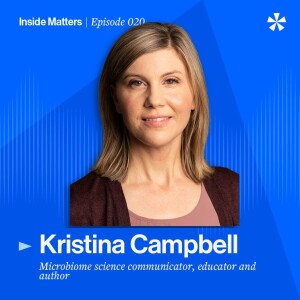
In episode 20 we chat with Kristina Campbell, microbiome science communicator, educator and author.
In this episode, I had a fascinating chat with Kristina Campbell, a science writer who specialises in tiny things. In other words, all the microorganisms that live on and inside of our bodies. It was our first remote podcast with a guest, and I'm really grateful for Kristina joining me and helping me produce such amazing content for all of our listeners.
We talked about what makes a good probiotic “good” and what makes a bad one “bad”. If you're somebody who consumes probiotics or is thinking about taking probiotics, you should tune into this episode because we really dig into where the field is and what are some of the key quality criteria that you should be looking for if you want to embark on a probiotics journey.
We also talked about where we see the field going in the next five years and even further on from that talked about some of the recent drug approvals as well, which we're all really excited about, plus some tips for parents who want their children to health a gut-healthy diet. This was the first remote recording that we did and it went really well.
As always, I would encourage you, if you're enjoying this podcast, to like and subscribe, the best thing you can possibly do to support Inside Matters is to hover your finger over the five-star reviews and kindly give us five stars. This helps bump us up the algorithm, helping the podcast reach more people who will ultimately benefit from the no-cost scientific information that we're delivering to you, the listener.
Timestamps:
00:00:00:00 - Intro
00:02:01:20 - Kristina introduces herself and outlines her background
00:05:13:09 - Kristina shares some of her own health journey
00:07:18:06 - Why the interest in probiotics?
00:11:32:01 - What to look for when considering a probiotic
00:14:33:24 - Probiotics vs life beneficial microbes
00:23:09:21 - Role of microorganisms and our digestion
00:32:24:02 - Microorganisms and new drug developments
00:35:13:01 - Fecal transplantation derivatives
00:37:24:09 - Developing bugs as drugs
00:40:10:22 - Should everyone take a probiotic?
00:43:00:18 - Kristina’s books
00:47:50:08 - What about prebiotics?
00:51:58:01 - Can a dead microorganism confer a health benefit
00:53:06:15 - The future of microorganism therapeutics
00:58:15:23 - Pioneers of the microbiome space
01:01:30:15 - Distilling the best information
01:08:31:21 - What’s next for Kristina?
01:11:30:15 - Tips for parents
Sep 21, 2023
Sep 21, 2023
1 hr 47 min
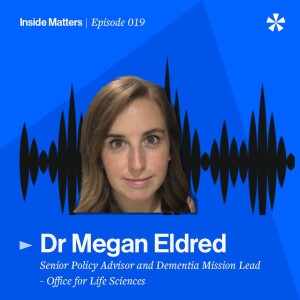
In episode 19 we chat with Dr Megan Eldred, Senior Policy Advisor and Dementia Mission Lead at the Office for Life Sciences.
Megan walked us through her journey from PhD and potential academia, to transition into the UK Civil Service and the work she does with the Office for Life Sciences. She told us about her journey to becoming the senior policy adviser and dementia mission lead on everything that entails.
More generally, the Mission aims to develop novel precision medicine tools that help boost the number and speed of clinical trials in dementia neurodegeneration. This is a much-needed and highly impactful endeavour. We all know somebody who is suffering from or who has suffered from dementia. It is devastating and still has massive unmet clinical needs and is a huge cost and burden to society that is a burden that is getting bigger because of an ageing population.
Megan talked about some interesting scientific and commercial developments in this field, including the approval of two drugs to slow the progression of dementia. We spoke about cures for Alzheimer's disease and how close and how far away we are. We also spoke about psychedelics, exercise, the mind-body connection and burnout.
As always, I would encourage you, if you're enjoying this podcast, to like and subscribe, the best thing you can possibly do to support Inside Matters is to hover your finger over the five star reviews and to kindly give us five stars. This helps bump us up the algorithm, helping the podcast reach more people that will ultimately benefit from the no-cost scientific information that we're delivering to you, the listener.
Timestamps:
00:00:00:00 -Intro
00:01:51:04 - Dr McIlroy’s neurodegenerative family history
00:04:01:20 - Dutch care home designed for dementia
00:04:43:02 - Japanese robotic seal
00:06:35:06 - Pet dogs and our microbiome
00:07:41:10 - Link between microbiome and depression
00:09:17:07 - Mice research
00:11:44:02 - Can the microbiome cure depression longterm?
00:13:30:01 - How habits are formed
00:15:22:27 - Addictions and their cure
00:19:15:28 - Fight or flight responses
00:25:41:01 - Building resilience
00:27:57:24 - Choosing a career path
00:30:36:20 - Undertaking a physiology degree
00:33:03:02 - Unknown unknowns
00:35:50:08 - The cell fate in the retina
00:37:55:24 - Intelligent design?
00:41:55:10 - Micro-dosing
00:49:33:11 - Understanding the retina
00:55:10:29 - Starting a career in the civil service
00:59:13:24 - Scientists working for the government
01:04:59:23 - Centre for Science and Policy
01:08:59:15 - Role as lead at Office for Life Sciences
01:14:46:09 - Focus on biomarkers
01:17:52:04 - Drugs approval for treating dimensia
01:20:10:10 - Understanding the disease pathway
01:24:51:08 - Funding research
01:26:44:21 - Our Future Health
01:34:28:01 - Sharing IP with competitors
01:39:45:24 - CSF testing
01:41:51:12 - Inflammation and the disease pathway
01:43:13:15 - Vaccine for cognitive disease?
01:46:19:27 - Conclusion
May 25, 2023
May 25, 2023
1 hr 43 min
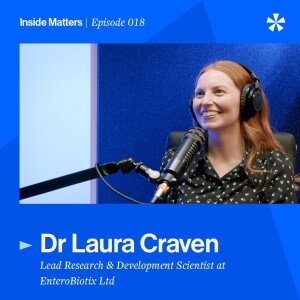
Dr Laura Craven is Lead Research & Development Scientist at EnteroBiotix and has a PhD in Microbiology and Immunology, specialising in gut microbiome modulation.
Dr Craven’s studies include research into the gut's role in auto-immune diseases like MS.
In this episode, Dr Craven joins James to discuss her journey from completing her PhD in Canada and the impact the NEMJ’s paper on Duodenal Infusion of Donor Feces for Recurrent Clostridium difficile” had on her science career, along with her own personal health diagnosis of Type 1 diabetes.
They chat about the difference between FMT and IMT, leaky gut syndrome and the factors, including stress, which play a part in us developing this challenging condition. And they broach the topics of probiotics, improving gut permeability, and whether having a morning coffee is actually a good idea.
Timestamps:
00:00:00 intro
00:00:29 getting into the field of the microbiome?
00:01:45 impact of the NEMJ paper
00:03:10 what was Dr Craven’s PhD on?
00:05:33 what’s the difference between “FMT” & “IMT”?
00:08:51 treating NAFLD with FMT
00:14:23 Enterobiotix and staff dietary provisions
00:16:18 Dr Craven discusses leaky gut syndrome
00:18:06 Wim Hof being injected with bacterial endotoxins
00:20:35 more discussion on leaky gut
00:21:22 getting a strong gut rather than a leaky one
00:22:26 How do doctors diagnose leaky gut?
00:24:06 how does FMT/IMT have an impact on leaky gut?
00:26:22 Dr Craven's study findings in relation to treating NAFLD
00:27:32 discussion around endogenous alcohol production
00:31:12 how has the public’s perception of FMT/IMT changed
00:34:14 gut permeability can be improved via FMT
00:37:41 treating MS with FMT/IMT
00:38:51 what factors cause leaky guy and what's the role of stress?
00:41:48 the connection between leaky guy and autoimmune diseases
00:44:10 what is a probiotic?
00:47:15 Dr Craven's move from Canada to Scotland
00:54:45 living with Type 1 diabetes
00:57:58 how do I improve my gut health?
01:10:32 hopes for diabetes and the role of FMT/IMT
01:20:04 is having a morning coffee a good idea?
01:21:18 where is the microbiome field heading in the future?
01:25:57 interaction between the microbiome and the host
01:26:54 what is engraftment?
01:32:13 what's FMT/IMT going to be used for next?
01:35:08 dietary challenges upon moving to Scotland
01:37:38 other scientific interests outside of the microbiome
01:39:14 the potential role of AI for health management
May 11, 2023
May 11, 2023
1 hr 36 min
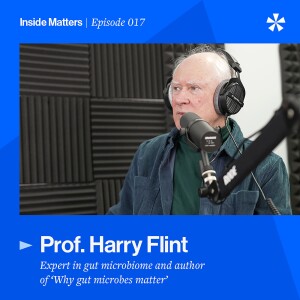
Professor Harry Flint is a world leader in gut microbiome science and Professor Emeritus at the Rowett Institute at the University of Aberdeen. He's known for his book, "Why Gut Microbes Matter" and has two species of gut bacteria named after him: 'HarryFlintia' and 'Flintibacter'.
As part of a research collaboration, Professor Flint helped to identify a combination of six naturally occurring bacteria that work to eradicate a highly contagious form of Clostridium difficile (C. diff). The results of this research illustrated the effectiveness of utilising a mix of bacteria naturally found in the gut to displace C. diff and supershedder microbiota. The research helped develop a standardised mixture treatment for FMT.
Professor Flint began studying ecology at university before switching to genetics, completing his PhD in this field. He then worked as a lecturer for 6 years and then came back to Edinburgh to start a training fellowship to learn molecular biology in 1982. His career began at the Rowett Institute in 1985, with a focus on the rumen of animals due to the complexity of the microbiology of that system of digestion.
He joins James in this episode of Inside Matters, the Gut Health Podcast, to chat about his career as he nears retirement, and the ground-breaking research into the complex universe of the gut microbiome. They cover a variety of topics including the importance of the digestive system of rumens, symbiosis in living organisms and dive into the different levels founds in the gut's microbiome.
TIMESTAMPS:
00:00:00 Intro00:00:26 How did you get into the field of the microbiome00:04:07 What was known of the rumen in the 80s00:08:20 The discovery of key gut bacteria00:10:07 What's the story with termites?00:12:23 Does every living thing have symbiosis?00:14:31 How diverse is the rumen?00:17:00 Transition into human gut research00:19:29 In the 90s what was known of the gut biome?00:22:07 The different levels of the gut microbiome00:26:19 The importance of starch for the microbiome00:30:08 What is a keystone species and how many?00:35:11 What is an enterotype?00:37:56 What is prevotella?00:41:12 Should everyone have a fibre supplement?00:44:58 Does going plant-based improve overall health?00:47:29 Why are the microbes in our gut in the first place?00:51:08 The uniqueness of each human's microbiome00:56:27 10 functional groups found in human stool?00:59:11 Are there disease states with all functional groups?01:02:45 Breast-fed babies with less biome diversity?01:07:39 Important metabolites from the biome01:11:16 What determines ph balance in the biome?01:13:29 What still needs to be characterised in the biome?01:18:51 Do gut bacteria have a form of consciousness?01:24:23 Will AI help gut biome research advance?01:28:03 What about fungi in the gut?01:29:38 What should a healthy microbiome look like?
Apr 13, 2023
Apr 13, 2023
1 hr 55 min
Learn more about Inside Matters - https://insidematters.health/
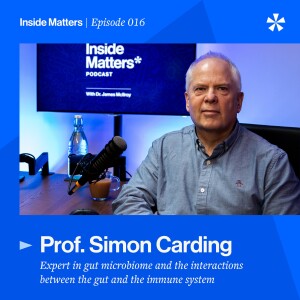
Professor Simon Carding is Group Leader at the Quadram Institute and is a Professor of Mucosal Immunology at the University of East Anglia.
Professor Carding's research covers a broad area of gut biology including epithelial cell physiology, mucus and glycobiology, mucosal immunology, commensal microbiology, foodborne bacterial pathogens, and mathematical modelling and bioinformatics. The success of this programme has led to the establishment of the Gut Microbes and Health research programme that is integral to the research agenda of The Quadram Institute.
In this episode, Dr McIlory chats with Professor Carding about his journey into the field of the gut microbiome and they discuss some of the ground-breaking ways his research is revealing the connection between gut health and debilitating conditions such as Parkinson's Disease, Alzheimer's and ME. They also cover the topics of how to ensure good gut health while debunking some popular myths on the topic.
Mar 30, 2023
Mar 30, 2023
1 hr 43 min
Learn more about Inside Matters - https://insidematters.health/
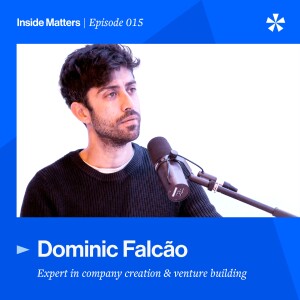
In this week’s episode, James has a lively discussion with Dominic Falcão about science, new technologies, starting and securing funding for tech companies and their personal philosophies and outlooks when it comes to development.
Dominic is a co-founder of Deep Science Ventures (DSV), a company that focuses on four key outcomes: restorative cultivation, scaling intelligence, reversing global heating and curative therapeutics.
He previously led Imperial College London’s science startup programme: worked with over 200 student companies, and supported a fraction of these to raise over £25m in funding within 3 years.
Dom admits to being obsessed with building new companies to solve the climate crisis, from carbon-neutral fuels and negative emissions technologies to market-side interventions to funnel more finance profitably into climate solutions. Via DSV, they are championing the diversity of background and vocation of focus in STEM education, starting with a global, diversity-led venture-focused science PhD programme.
Mar 2, 2023
Mar 2, 2023
1 hr 17 min
Learn more about this episode's guest and the topics discussed - https://insidematters.health/
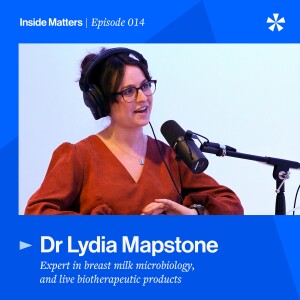
Dr Mapstone is co-founder and CEO at BoobyBiome, a biotechnology company developing live biotherapeutic products to improve and protect infant health. BoobyBiome are seeking to achieve this by rationally designing microbial therapeutics from the beast milk microbiome. Dr Mapstone holds a PhD in Synthetic Biology from UCL.