Inside Matters
The gut health show – conversations with the most forward-thinking minds in health, fitness, science, nutrition and business. In-depth discussions about how our gut microbiome impacts our health, well-being, mood and more.
Inside Matters was conceived by microbiome expert Dr James McIlroy as a platform to raise awareness of the importance of the gut microbiome. Our aim is to inspire and educate listeners around the world about the importance of gut health, equipping them with the knowledge they need to transform their lives for the better.
Produced by the Podcast Studio Glasgow.







Episodes
Feb 2, 2023
Feb 2, 2023
2hr 26 min
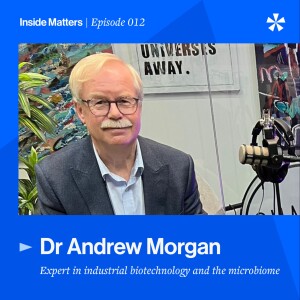
Learn more about the podcast here - https://insidematters.health/episodes/dr-andrew-morgan
Dr Andrew Morgan is the former Chief Scientist of DuPont Nutrition & Health. He has forty years of experience in biosciences innovation in major global science-based companies spanning nutrition, health and agri-food.He is actively involved in supporting microbiome innovators and researchers as well as the wider industry through his role as Chair of the Innovate UK KTN Microbiome Innovation Network Advisory Board. He also serves as a Royal Society Entrepreneur in Residence at the University of Exeter.
Jan 5, 2023
Jan 5, 2023
1hr 30 min
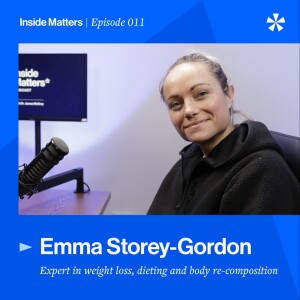
Emma is a fitness coach, sports scientist and researcher with a large following on social media and multiple successful online businesses.
Through structured programmes and coaching, Emma has helped thousands of people lose weight and improve their body composition. She understands the science underpinning successful diets and uses her knowledge to help other personal trainers and coaches help their respective clients.
To find out more about Emma’s products and businesses, check out: https://esgfitness.co.uk
This episode is full of recommendations and knowledge relating to how to improve your physique and live a longer, healthier and happier life. When asked to distil her top recommendations, Emma came up with the following advice:
Eat in accordance with your energy demands
Eat primarily whole foods, limit processed foods
Reduce snacking to a minimum
To give context to the above, Emma noted that it was challenging to figure out exactly what your energy demands are. No calorie calculator / energy demand calculator is going to be entirely accurate. Emma suggests tracking your food and body weight for a period of time and using this as a basis to make adjustments. Daily fluctuations in weight are not important due to water fluctuation and varying food intake. Weekly / monthly fluctuations in weight are important.
The concept of eating minimally processed foods has been discussed several times on Inside Matters and is sound advice for someone wanting to improve their body composition and the composition of their microbiome.
On the subject of snacking, Emma’s view is that this is one of the primary reasons for people being unable to lose weight or a reason for putting on weight. Snacking can be mindless and instinctive e.g a biscuit with coffee in the office or finishing a plate of food for the sake of finishing a plate of food and not being wasteful.
Beyond her big three tips, a lot of Emma’s advice centred around what she calls ‘showing up’, essentially, how you approach a task or your day. How you show up dictates how you perform and how others respond to your actions. Exercise helps Emma show up at her best, and the benefits of exercise for her extend beyond physical health and into performance at work and in life.
Her morning routine is as follows:
Wake up at 05:45, put the kettle on
Undertake 10 pull-ups and push-upsTry not to open emails until 7 - be mindful
07:30 gym
09:00 start work
On supplements, Emma recommends fish oil, vitamin D, creatine and B12. Creatine is particularly beneficial for people that do not eat animal products - most notably red meat.
Dec 22, 2022
Dec 22, 2022
1hr 41 min
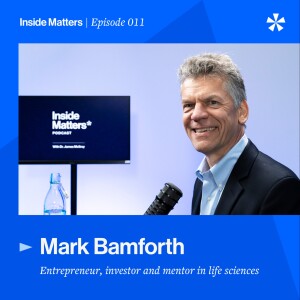
Mark R. Bamforth is an entrepreneur, investor and mentor in life sciences. Mark has founded, built, and sold three contract development and manufacturing organisations (CDMOs) over the last 12 years.
His first company, Gallus Biopharmaceuticals, focused on monoclonal antibodies. His second company, Brammer Bio produced viral vectors for gene therapies. His third company. ArrantaBio, produced advanced therapies, including microbiome therapeutics.
Previously, Bamforth spent 22 years at Genzyme, latterly running global manufacturing operations. His career began as a petroleum engineer with Britoil, then as a chemical engineer with Whitbread.
Bamforth serves on the boards of Continuus Pharma, EnteroBiotix, Inceptor Bio, Pneumagen, and Entrepreneurial Scotland. He has a BS in Chemical Engineering from Strathclyde University and an MBA from Henley Management College.
Dec 8, 2022
Dec 8, 2022
1hr 40 min
Visit our website for full show notes and guest information - https://insidematters.health/episodes/kristen-stavridis
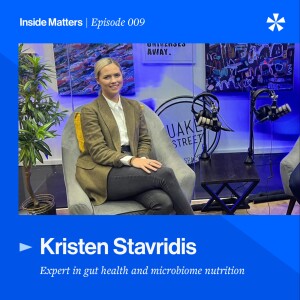
Kristen Stavridis is a nutritionist and speaker based in London who focuses on gut health and how we can improve this through healthy eating and lifestyle. She is also the creator of The Gut Health Programme, a programme which has helped over 800 people improve their gut microbiome and overall well-being. Her main aim is to help educate people both on social media and in person about how important diet is and its importance in improving our gut and digestion.
To learn more about Kristen, you can follow her on social media: @thatnextlevelgirl
For rapid improvements to gut health and the microbiome, Kristen recommends her ‘gut reset diet’, in which gluten, alcohol, coffee, dairy and processed sugars are cut out completely for 30 days. Following this, her recommendation is to adopt a 70:30 and 80:20 approach in which 30% or 20% of the diet/lifestyle is relaxed and 70% or 80% is ‘on plan’. As part of the gut reset protocol, Kristen also recommends that her clients take a symbiotic - a combination of a prebiotic and a probiotic.
Beyond the gut reset diet, the simplest and most effective change to make to support your microbiome and gut health is to convert to a predominantly plant-based diet and eat a variety of plants every day. Kristen recommends properly washing fruits and vegetables due to pesticides being present on the surface of the food. To do this effectively, Kirsten has developed a process in which vegetables and fruit are put into a clean sink filled with water that has been supplemented with a tablespoon of baking soda and apple cider vinegar for 12-15 minutes.
Kristen recommends avoiding sugar-free/artificially sweetened drinks as these have demonstrably negative impacts on the microbiome.
1:20 bloating
2:10 what is the gut
6:15 gut health symptoms
8:10 gut health influencers
11:17 Kristen's journey and the gut health programme
18:38 gut health programme results
22:15 bloating
25:50 gut health and social media
30:52 Home microbiome testing (good clip)
34:30 Best microbiome foods and diet
38:55 GMOs and red meat
41:06 The microbiome and the skin
49:24 cravings and the microbiome
52:33 dietary plans on the gut reset diet
1:01:32 Prebiotics and probiotics
1:06:14 protein supplementation
1:07:22 Artificial sweeteners and sugar-free drinks
1:13:18 Juice diets
1:17:57 Kristen's diet
1:24:00 FODMAP diets
1:26:30 Stress
1:29:11 Vegetarian / vegan diets
1:30:40 Gut health basics
1:35:17 Mushroom
Nov 24, 2022
Nov 24, 2022
1hr 17 min
Learn more about the podcast here - https://insidematters.health/episodes
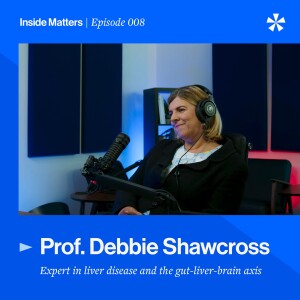
Debbie Shawcross is a clinician scientist and Professor of Hepatology and Chronic Liver Failure at Kings College London. She is a global key opinion leader in hepatic encephalopathy (HE) and has a specific research interest in why patients with advanced chronic liver disease are susceptible to developing an infection. Professor Shawcross also leads the gut microbial manipulation and chronic liver failure laboratory (Shawcross Laboratory) in the James Black Centre, Kings College London.
She is the Chief Investigator of the National Institute for Health Research (NIHR) EME-funded PROMISE Trial investigating faecal microbiota transplantation as a treatment for patients with alcohol and metabolic-related cirrhosis and Principal Investigator of the EU Horizon 20:20-funded MICROB-PREDICT Trial.
Liver disease is a growing problem globally, with 40% of adults alive today having excess fat accumulating in their livers. This condition, called fatty liver disease, is a starting point for a range of liver diseases including cirrhosis (scarring of the liver) and liver cancer.
There is a known link between the gut, liver and brain. These connections and interrelationships are called the ‘gut-liver-brain axis’. The liver and the blood are connected anatomically through the hepatic portal vein. The gut and the brain are connected anatomically through a nerve called the vagus nerve. More generally, the organs are connected through metabolites and signalling molecules produced by the gut microbiome that can travel in the blood.
Multiple studies that have been conducted in humans and animals have shown that the microbiome plays a fundamental role in the development of liver disease and is therefore a promising potential target for prevention/treatment. In the episode, Professor Shawcross provides an excellent overview of what changes to the microbiome occur and why these are important. Briefly, in patients with liver disease, there is lower bacterial microbiome diversity (fewer species) and within the species that are residing, there are relatively higher proportions of bacteria that cause inflammation, as well as bacteria that are resistant to antibiotics (multi-drug resistant organisms ‘MDROs’). Additionally, in liver disease, a barrier that prevents bacteria from seeping out of the intestine into the blood/body becomes damaged and ‘leaky’. This process constellation results in something called ‘leaky gut’.
As patients get sicker with the liver disease they progress to cirrhosis, and patients with cirrhosis can suffer from life-threatening complications, such as hepatic encephalopathy (HE). HE is a devastating condition that has parallels to dementia and severely impacts the quality of life in patients suffering from the disease. The current standard of care (best available treatment) for HE is the combination of a laxative and an antibiotic, both modulating the gut microbiome. The treatments are inadequate through and there is still a high unmet need. Professor Shawcross believes that intestinal microbiota transfer (IMT) could be an effective solution that decolonises MDROs, improves the gut-intestinal barrier and improves the composition of the microbiome.
Professor Shawcross completed an IMT study in patients suffering from cirrhosis (the PROFIT study) https://kclpure.kcl.ac.uk/portal/en/publications/profit-a-prospective-randomised-placebo-controlled-feasibility-trial-of-faecal-microbiota-transplantation-in-cirrhosis(4c186477-ea55-48eb-b7b9-a4b8b11d5099)/export.html. The results were promising, with IMT being safe, well tolerated and having favourable impacts on the microbiome. The success of this trial enabled Professor Shawcross to raise money from the NIHR to undertake a larger study (the PROMISE trial). Professor Shawcross is also involved in several other studies – the details of which can be found here: https://www.fmt-trials.org. Professor Shawcross’s vision is to develop new treatments for patients with liver disease that modulate the microbiome.
Dr James McIlroy and Professor Shawcross also discussed a number of other topics such as the microbiome in depression, the potential importance of coffee for liver health and much more.
00:39 Faecal microbiota transplantation (FMT) and the PROFIT trial
11:38 The microbiome in liver disease
13:58 The history of FMT in liver disease
18:35 Microbiome diversity
20:03 The impact of the pandemic on the microbiome
22:14 Types of liver disease
25:32 Treating cirrhosis
26:44 Hepatitis C and Hepatitis B
29:40 Fatty liver and the microbiome
32:27 Animal models and liver disease
33:15 Ammonia and liver disease
35:07 Hepatic Encephalopathy
39:15 The gut barrier
41:52 Hepatic Encephalopathy
46:40 The PROMISE trial
54:24 The liver and mental health
58:37 The threat of antimicrobial resistance
1:02:22 The FERARO trial
1:03:30 Coffee and the liver
1:05:33 Probiotics in liver disease
1:09:15 Veganism
1:10:40 What makes a good FMT donor
1:12:30 Antibiotics before FMT
1:14:16 Diet and FMT
Nov 17, 2022
Nov 17, 2022
1hr 37 min
This was a wide-ranging and fun conversation that covered a lot of ground. We could have kept going for a lot longer.
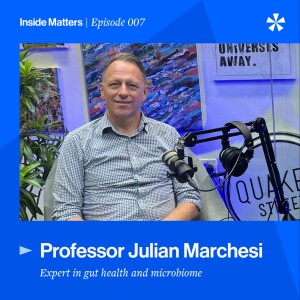
Professor Marchesi is an expert on the application of next-generation sequencing technology and novel analytical methods to study microbial ecologies.
Our understanding of the microbiome and the genomic potential of the microorganisms within the microbiome has vastly increased due improvements to DNA sequencing technology and associated reductions in the cost of sequencing a genome.
DNA sequencing has allowed us to create inventories of microbiomes based on the source of the sample collected: stool, sputum etc. These inventories allow us to understand datasets generated from research studies. However, Professor Marchesi describes there being microbial ‘dark matter’ within the microbiome, in which dark matter is defined as a DNA sequence that has never been definitively linked to a strain of bacteria that has been cultured in a pure culture setting and phenotypically characterised. This is an inherent limitation to our understanding.
There are a variety of technologies and approaches available to study the microbiome beyond using next-generation sequencing technology. They can be broadly described and categorised as ‘omics’. Each of the Omics describes a different technique e.g proteomics (study of proteins) metabolomics (study of metabolites) etc. Researchers combine these techniques to study microbes and ecosystems, but there is still a lot that we do not know. To exemplify this, Professor Marceshi referenced E.coli, the most well-studied microbe on the planet. Despite all of the research that has been conducted to date to characterise E.coli, only 40% of its genome has been mapped to particular functions.
Professor Marchesi and colleagues at Imperial College have pioneered the application of intestinal microbiota transfer (IMT) to different diseases, including recurrent C.difficle infection and patients undergoing treatment for blood cancer.
Looking into the future, Professor Marchesi believes that probiotics will be rationally described and selected based on specific microbiome profiles in the intended recipient (s). He also believes that donor screening for IMT will evolve and that robust analysis of the microbiome in patients before and after IMT procedures may reveal clues about the mechanism of action of IMT, which, in turn, may result in the discovery of new drug candidates.
—
Some facts from the conversation with Prof Marchesi :
50% of stool biomass is bacteria. It is for this reason that we alternate between being greater or less than 50% human/microbial.
They're roughly 150 species in the gut of any person and 1000’s different species.
The microbiome has been shown to have an impact on drug metabolism and safety/tolerability/efficacy.
There are bacteria that can cause uncontrolled growth in plants - there may be parallels between what happens in plants and what happens in human cells.
There are distinct differences between the microbiomes in the small and large intestines, as well as significant differences in immunology. The differences in microbiome profile primarily relate to differences in food sources.
Microbes can be described as factories that produce chemicals and proteins. We know more about chemicals then proteins such as short-chain fatty acids (an energy source for colonocytes acetate, proportionate, butyrate and valerate. Professor Marchesi describes them as anti-inflammatory, anti-proliferative and anti-carcinogenic - i.e they reduce the risk of cancer and help with your mental health.
Every one bacteria has ten viruses trying to predate it in the gut. Viruses are the most abundant organism on the planet. There are more viruses on the planet than there are stars in the Universe.
Timecodes:
00:00 Introduction
1:15 Silent retreats and isolation chambers
3:41 Artificial intelligence
6:10 Julian’s journey into the microbiome
9:10 Phylogeny and morphology
12:18 Evolution of DNA sequencing
13:40 Personalised medicine
14:51 The human genome project
15:33 Finding your way as a scientist
16:05 Culture-independent approaches and culture approaches
22:08 Dark matter
26:24 Naming bacteria after people
27:30 Omics and gene profiling
30:22 Drug metabolism and microbes
34:51 Is the microbiome the passenger or the driver?
36.06 Colon cancer and cancer in plants
40:24 Intracellular bacteria
41:10 Probiotics including the segment relating to a generic probiotic and IBD drug
45:25 Single strain vs a complex ecosystem
46:26 Small intestine vs large intestine microbiomes
51:29 Probiotics
54:10 Post-antibiotic use microbial therapy
55:52 Donor screening for intestinal microbiota transfer good clip of EnteroBiotix 58:40 where I talk about scale, would be good to clip
1:00:52 Using metabolomics to screen donors
1:01:25 What is metabolomics?
1:03:50 Microbial metabolites
1:05:30 Reverse engineering FMT/IMT
1:06:35 Bariatric surgery
1:08:30 Obesity and food cravings
1:11:06 Maternal transmission and the early life microbiome , also good clip on short-chain fatty acids
1:13:00 Microbial proteins, 10% of world's biomass is below the sea floor and it’s bacteria, good clip. Level of the adaptation is really good
1:15:30 Antimicrobial resistance
1:18:00 Fungi in the microbiome
1:19:10 Blastocystis hominis
1:20:50 Phage and fungi in the microbiome
1:29:22 Understanding how IMT / FMT works
Nov 10, 2022
Nov 10, 2022
1hr 15 min
Learn more about the podcast - https://insidematters.health/
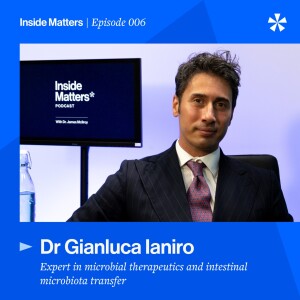
We talk with Dr Gianluca Ianiro about the concept of the microbiome clinician, intestinal microbiota transfer, and the future of microbial therapeutics
Dr Gianluca Ianiro, is a gastroenterologist at the Digestive Disease Center of the Fondazione A. Gemelli IRCCS and an adjunct professor in gastroenterology at the Università Cattolica del Sacro Cuore in Rome, Italy.
Dr Ianiro’s research focuses on clinical and translational studies on intestinal microbiota. He has established himself as a leading clinical and translational investigator focusing mainly in the field of intestinal microbiota with more than 180 peer reviewed publications including some of the best referral journals in Gastroenterology and Internal Medicine, including NEJM, Nature Medicine, Lancet Infectious Disease, and has received several research grants in support of his innovative research.
Dr Ianiro has been the secretary or the leader of several international consensus conferences on fecal microbiota transplantation. He was in the Young Talent Group and in the Research Committee, of the UEG (United European Gastroenterology), and has been awarded as UEG Rising Star in 2020. His current research is focused mainly on disentangling the rules of donor microbiome engraftment and on investigating FMT in other indications beyond C. difficile.
Intestinal microbiota transfer, also known as IMT, FMT, or a stool transplant, is a medical procedure that involves the transfer of microorganisms from a healthy donor into the intestinal tract of a recipient. IMT is an established treatment for recurrent C.difficile infection, with the first randomised controlled clinical trial published in 2013.
Since the first landmark clinical trial was published, there have been additional RCTs published in ulcerative colitis (a form of inflammatory bowel disease), irritable bowel syndrome, and metabolic syndrome. Other pilot studies have been conducted on patients suffering from cancer and who are undergoing immune system-stimulating treatment (immunotherapy). More research is required before IMT becomes an established therapy in these patient populations.
We do not fully understand how IMT works. The available evidence suggests that in successful IMT’s, donor microorganisms persist in the intestinal tract of the recipient after IMT. This process is called engraftment. The determinants of engraftment are an area of active scientific research.
Dr Ianiro and colleagues are pioneering the concept of a microbiome clinic in which doctors use microbiome data to inform clinical decision-making for patients. He believes that clinics like these are the future of modern medicine.
Dr Ianiro recommends diets that contain minimally processed and micronutrient-dense foods for the microbiome and gut health. Fruits, vegetables, and high fibre. He does not recommend probiotics for members of the general population.
Nov 3, 2022
Nov 3, 2022
1hr 22 min
Learn more about the podcast here - https://insidematters.health/
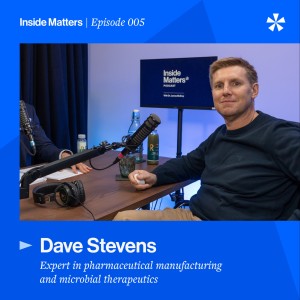
David (Dave) Stevens is the CEO of Arranta Bio, a leading contract development manufacturing organisation that specialises in advanced therapies, including microbiome therapeutics. ArrantaBio supports many of the world's leading microbiome companies that develop and manufacture novel drugs for the benefit of patients around the world.
Dave was formerly the Senior Vice President and Head of AMRI’s Drug Product business unit where he had P&L responsibility for sales and operations. During his tenure, he led the division through a period of significant growth and capacity expansion. Before leading the division, Dave held senior leadership roles at AMRI including Vice President, Sales & Marketing and General Manager of a sterile dosage form development and GMP manufacturing facility.
Dave is a native Scot that is passionate about building Scotland into a global leader in life sciences, as well as being a big believer in the power of the microbiome to benefit health.
- 0:00 Intro- 1:14: jet lag, training, intermittent fasting- 3:40 what motivates you to work- 5:00 moving from startup to scale up- 5:30 challenges in microbiome manufacturing / microbial fermentation- 5:58 what is a contract development manufacturing organisation (CDMO)?- 7:00 challenges for the microbiome field- 7:30 the microbiome as a therapeutic target- 09:40 intermittent fasting- 10:33 health span and lifespan- 12:37 what does ArrantaBio do- 14:00 mRNA technology - overcoming challenges and realising promises- 17:35 a Scottish success story- 21:18 mindset in Scotland vs USA- 27:15 how to become life sciences capital of the world- 32:27 first approved microbiome therapies- 35:12 characterisation of the microbial ecosystems- 37:20 dogs and depression- 38:10 types of microbiome therapies- 42:36 competing with other CDMOs- 46:02 manufacturing probiotics- 47:10 Good manufacturing practice- 48:50 Probiotics- 50:41 lost the screen- 51:50 innovation in the microbiome field- 53:00 lyophilisation- 54:24 Fermentation systems- 55:25 EnteroBiotix- 57:00 the gut-brain axis- 58:35 how good gut health makes you feel- 1:00:02 Gene therapy and the costs of cures- 1:03:00 the start of ArrantaBio and vision for the future- 1:08:00 buying the best to be the best- 1:10:30 leading organisations- 1:11:20 being a leader- 1:15:10 spending time with the best to be the best- 1:17:30 being a vision and mission-driven company- 1:17:45 the future of ArrantaBio

Oct 27, 2022
Oct 27, 2022
1hr 24 min
Visit the Inside Matters website for more information about the podcast and the guests - https://insidematters.health
Andy Scott is one of the UK's top amateur bodybuilders. In this episode, we dive into the world of bodybuilding and discuss in detail the psychological processes bodybuilders go through, along with the science of diet and the role the gut biome plays in their health and training performance.
Bodybuilding is the pursuit of aesthetic perfection, with perfection meaning different things to different people. Many of the core principles that are associated with success in bodybuilding can be applied to microbiome improvement and gut health. These include consistency, discipline, eating minimally processed micronutrient-dense food, training muscle groups and experimenting with diets to figure out what works best.
Prioritising gut health is becoming more and more popular in bodybuilding, with top athletes now undertaking elimination diets, taking probiotics and eating more ‘microbiome-friendly foods.
Some of the topics covered in this conversation:
Top bodybuilders take decades to build their physiques. Consistency, forming habits and discipline were recurring themes associated with success throughout the podcast.
Bodybuilding has evolved over time, just like other sports, with improvements to techniques, methods, supplements and systems.
Andy competes within the super heavyweight division (225lbs+) at 3% body fat. To put that into context, the average male is 19/20% body fat and typically abs become visible at 9/10% body fat. Bodybuilders like Andy achieve this through year-round intense training and dieting. There are only a small number of days/weeks in a year where a bodybuilder doesn’t feel full all the time (growth phase) or is hungry all the time (dieting phase).
To achieve maximum muscle growth, bodybuilders train muscles to failure (when it is not possible to do another rep) with a controlled tempo (a slow eccentric, typically 2-3 seconds, and a fast concentric). This training philosophy can be adopted by anyone wanting to improve their physique and not necessarily only those who want to be a bodybuilder. Andy thinks that it is still possible to build an amazing physique without training to failure, but it would take twice as long.
In Andy’s opinion, the fastest way to lose fast is a low-carbohydrate diet. Some people recommend a zero-carbohydrate diet. However, to retain muscle, maintaining carbohydrate intake is important. Slowly decreasing calories in a tapered fashion while maintaining intense training is the best way to lose fat and preserve muscle.
Andy implements elimination diets for himself and his clients with a view to improving gut health and reducing gastric distress. In these diets, Andy removes a food source for 3-5 days, sometimes longer, in parallel with tracking how the person feels. Anecdotally he sees improvements in performance in the gym because of diet modification through elimination diets.
In terms of foods that typically cause problems, he finds that oats and broccoli can be a problem for his clients. Simple changes like moving the oats to a guaranteed gluten-free source and moving to another vegetable type can have a positive impact.
Bodybuilders can take up to 20 weeks to get show ready. Towards the end of the show, they lack energy. So much so, that even getting up off a sofa to make a coffee is a challenging task.
Andy eats 6,500 calories a day from micronutrient-dense, unprocessed food. He prioritises animal sources of protein. Interestingly, Andy is not aware of any top professional bodybuilders being vegan or vegetarian. He does have clients who make good progress on these diets though.
Andy and James discussed something called ‘if it fits your macros’ which is a diet philosophy underpinned by hitting macronutrient targets through any food/drink sources i.e diets are not fixed/set in terms of food choices. It was agreed that food sources and the quality of food is equally if not more important than simply hitting a calorie/macronutrient target.
Andy’s advice to those getting started is to start slow and to make small changes that you can stick to every day and consistently e.g walking for 30 minutes each day, building up to walking and then lifting weights. The same can be said for diets.
Oct 20, 2022
Oct 20, 2022
1hr 48 min
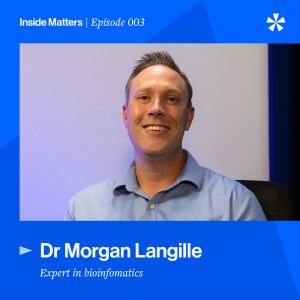
Dr Morgan Langille, an expert in bioinformatics, talks about developing novel technologies and techniques that enable a better understanding of human-microbial interactions.
Dr Langille discusses advances in the microbiome field as well as combining computer science and microbiology to lead to new therapeutics and diagnostics.
Episode Time Stamps
00:00 Intro
00:30, How Dr Langille got into the field of the microbiome
04:30, Gene duplication and reverse transcription
05:48, What is bioinformatics?
06:34, The evolution of bioinformatics
09:30, Genomic islands
1:04 - Phages
14:30 Dr Langille’s first bioinformatics tool
16:00 Bacterial genome libraries
18:20 Extremeophilic bacteria
19:00 Will there be bugs in space
21:42 Bacteria on Mars
22:15 Human microbiome diversity
23:30 Number of human cells vs microbes in the body
25:00 Genomic diversity within the microbiome
28:00 Perfect bioinformatics
33:40 Bioinformatics and microbiome research
34:37 Short read vs long read sequencing
45:30 Shotgun metagenomics
48:00 Bioinformatic tool development
1:01:00 Differences in bioinformatic tools and impact on research
1:06:00 Solutions to current technology challenges in bioinformatics
1:10:06 Tools that Morgan has developed
1:08:05 PICRUSt - bioinformatic tool
1:18:35 Jarvis - bioinformatic tool
1:24:00 Talent wars for bioinformatics
1:26:36 Machine learning and AI
1:32:51 Colorectal cancer and AI
1:36:35 Is blood sterile?
1:38:00 What does the future of medicine look like
1:40:51 DIY FMT